
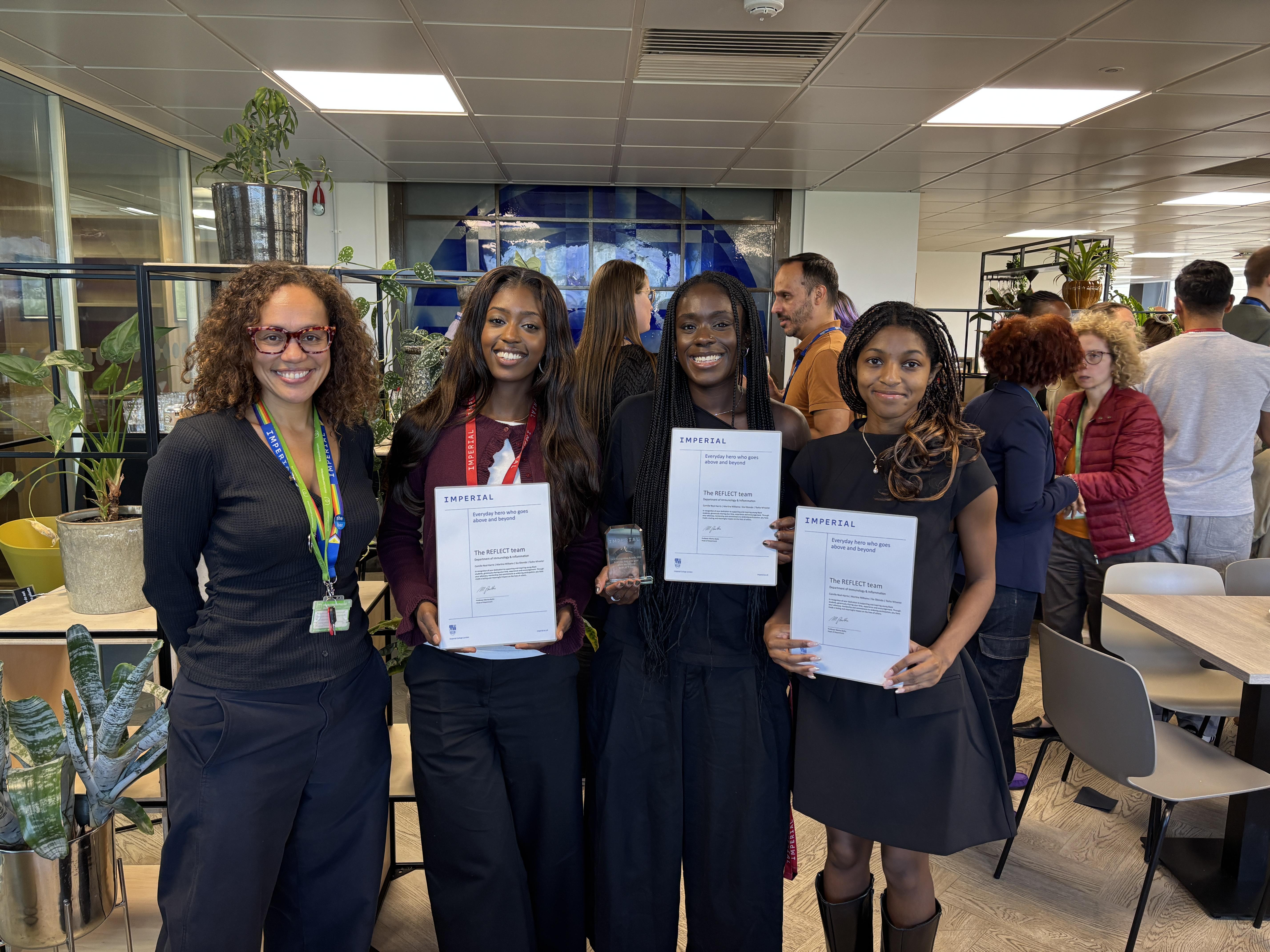
Young people of Black heritage remain underrepresented across the biosciences. What could universities across the UK do to change this?
For Black History Month and this year's theme of 'Honouring Our Communities', we're highlighting REFLECT - a two-week programme developed by four British Society for Immunology (BSI) members at Imperial College London. Through lectures and activities, REFLECT helps young people of Black heritage explore biosciences, meet scientists and prepare for university study. By building students’ knowledge and confidence, the programme aims to help address barriers to pursuing a career in science.
Here, the team shares how they brought REFLECT to life, what they learnt along the way and practical advice for others looking to make a difference at their own institutions.
Identifying the need
Imperial received the Race Equality Charter Bronze Award in 2021. Despite this, at the time of receiving this award, students of Black heritage made up 3% of Imperial's undergraduate population, falling to 2% at postgraduate level. This is in stark contrast to the 12% of London's population who are Black. Students of Black heritage remain among the least represented ethnic groups, both at Imperial and across higher education in the UK.
Students often report a lack of familiarity with the different courses available and experience choice fatigue, driven by a fear of choosing the wrong course. We identified this as a significant barrier to pursuing bioscience degrees, given the wide range of courses offered within biological sciences and the lack of understanding of differences between courses and disciplines.
Turning the idea into a plan
We started with a proposal which included a summary of the project, background on its importance, our objectives and planned activities, a budget, a risk assessment, and a description of how we intended to measure and report the project’s impact. We revised it several times, allowing a few months to refine the final draft before and during funding applications. We also liaised with staff who had previously been involved in outreach projects to gauge what might be feasible.
Our advice: Allow plenty of time to develop your proposal and explore funding opportunities. Set clear objectives and create a realistic plan for delivering and evaluating your project.
Getting the right people on board
To build support for REFLECT, we secured funding from Imperial's Department of Immunology and Inflammation (DoII), Department of Natural Sciences and Department of Brain Sciences. Dr Wayne Mitchell, Associate Provost for Equality, Diversity and Inclusion (EDI) at Imperial, kindly put us in touch with Jessica Kitsell, Imperial’s EDI coordinator, who invited us to present the project at the DoII Away Day. This gave us the opportunity to introduce REFLECT to the department and explain how people could get involved. Members of the departments then volunteered to join the panel for our REFLECT celebration day, helping us bring a wider range of perspectives to the event.
Our advice: Reach out to departmental leaders, EDI teams, and university outreach staff. Existing networks can help you find funding, volunteers and speakers, as well as identify other sources of support.
Reaching the students who could benefit most
There are several challenges involved in developing an outreach project for young people. For example, safeguarding requirements need to be considered when working with under-18s, including whether project leaders require an enhanced Disclosure and Barring Service (DBS) check.
However, the biggest challenge was recruitment itself. We aimed to reach young people who were interested in life sciences, but could particularly benefit from our guidance, rather than those who were likely already on track to study their chosen subject at Imperial.
With this in mind, we consulted databases ranking London's schools by outreach priority. We contacted more than 200 schools to advertise our application form, which asked students to write a short statement explaining what they hoped to gain from the programme. Like Imperial, many universities also have outreach newsletters which allow interested candidates to stay updated on programmes with available places – this could provide another route for advertising a programme at your university!
Our advice: Consider which students your programme is best placed to support and how to make the opportunity accessible to them. Thinking carefully about your target audience from the outset can help you focus your recruitment efforts where they may have the greatest benefit.
Building the programme
We focused on the knowledge and skills students needed to choose university courses and prepare for undergraduate study. Drawing on our own experiences, we developed introductory lectures on biomedicine, biochemistry, science communication and bioengineering, exploring the differences between bioscience degrees. The sessions also incorporated practical case studies, discussions of Black pioneers in science, technology, engineering and mathematics (STEM), and guidance on university modules and grading.
We wanted students to take an active part in REFLECT, rather than simply attend lectures. Students worked in groups to research a topic of their choice, using scientific search engines such as PubMed to explore the literature. We showed them how to present their findings in a scientific poster and offered optional drop-in sessions for additional support. The poster review sessions and presentations took place online, giving students the opportunity to put their learning into practice and share their findings with one another.
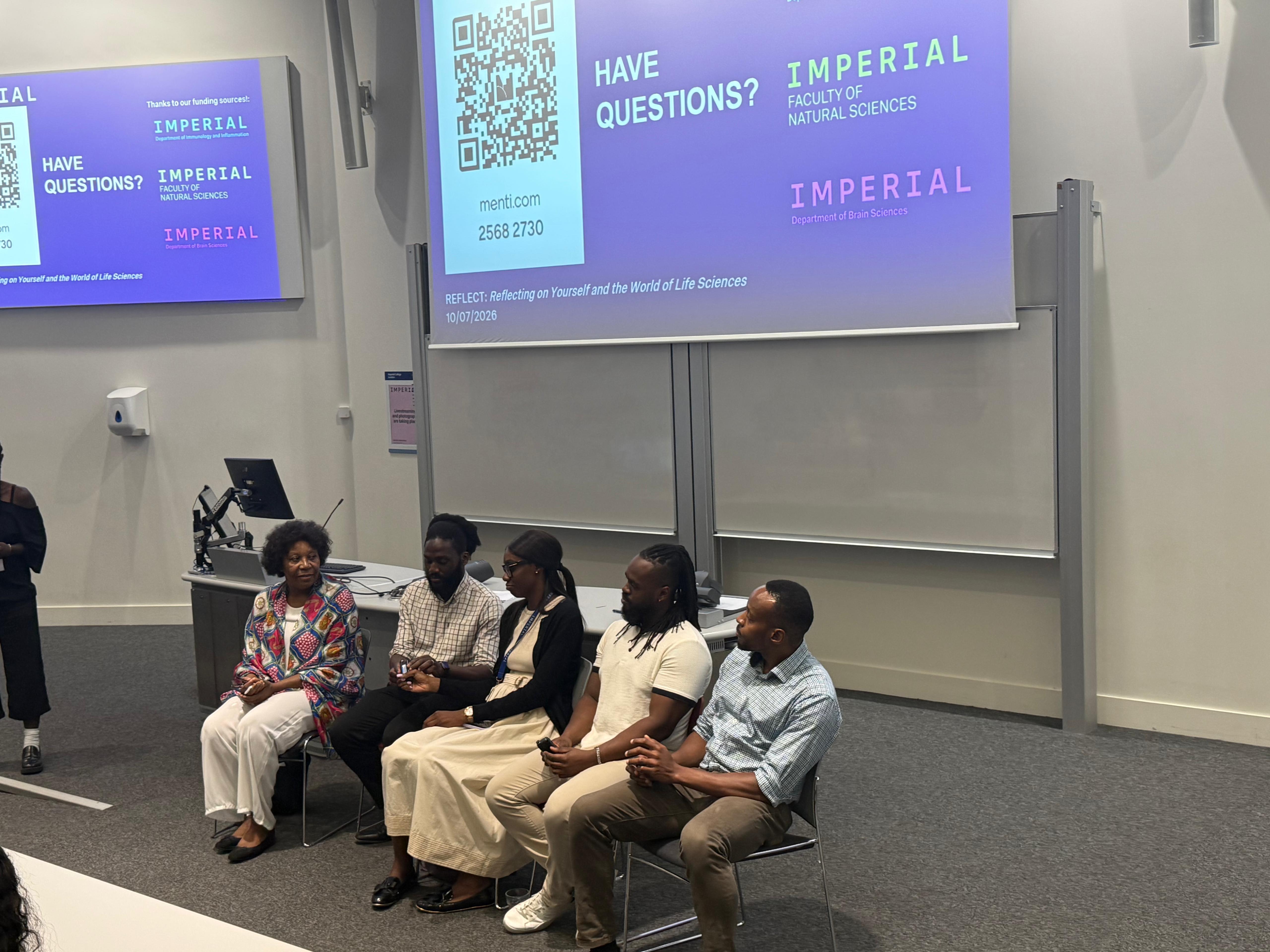
The programme culminated in an in-person celebration day, which included a tour of the Imperial campus, an awards presentation and a Q&A panel featuring Black scientists working in the field. We recruited professionals for the event through laboratory colleagues and contacts made at conferences, giving students the opportunity to hear about different experiences and career paths in STEM.
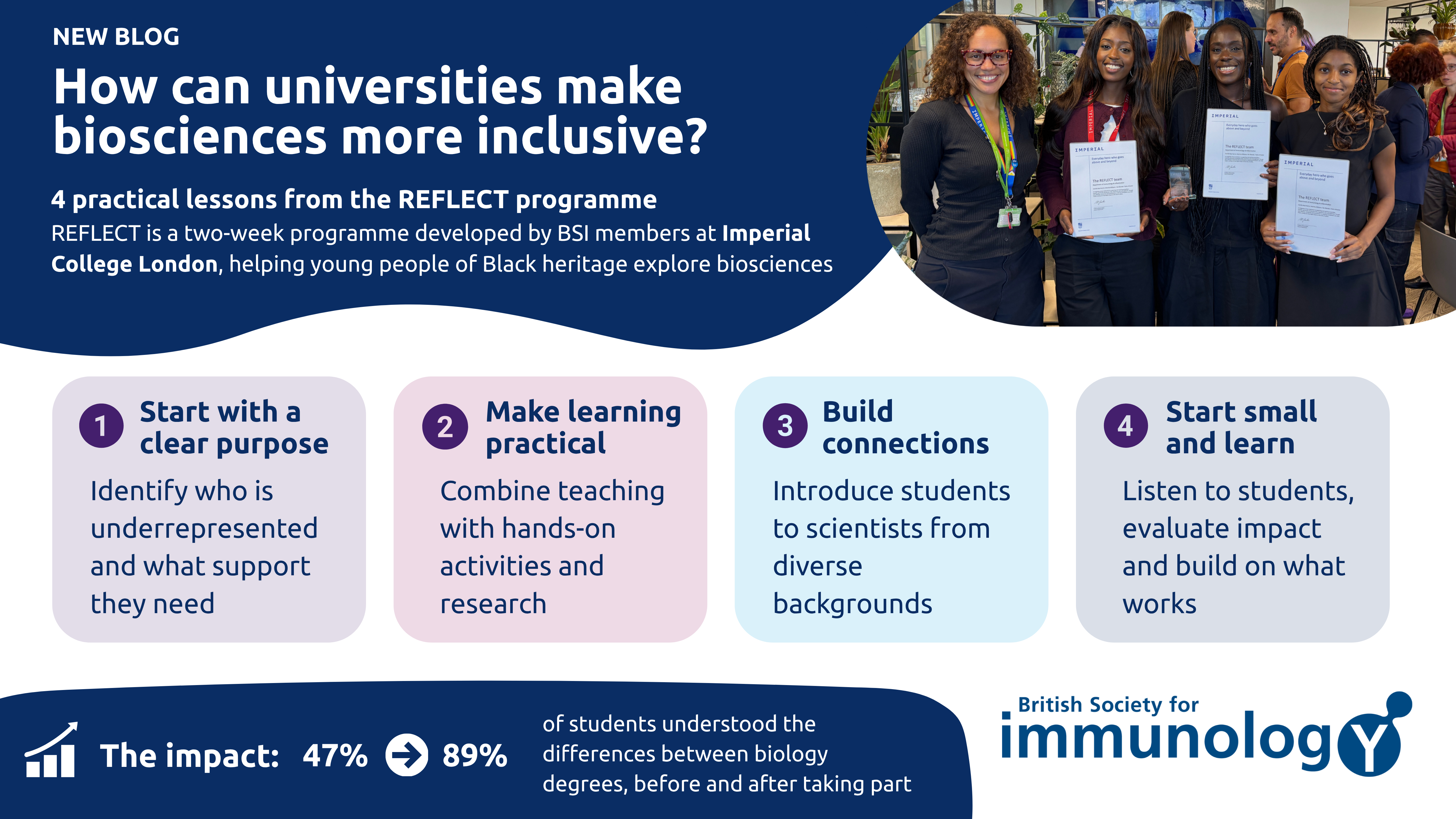
Our advice: Set clear learning objectives and combine foundational teaching with practical activities that encourage students to apply what they learn. Where possible, include opportunities for students to meet scientists and explore different career paths, drawing on your professional networks to bring in a range of perspectives.
Measuring the impact
When recruiting students, we found that only 47% of students felt they understood the differences between biology degrees. After completing the programme this figure rose to 89%.
Student feedback highlighted increased confidence and a better understanding of science communication and bioscience degrees. Feedback also suggested increased aspirations to apply to Imperial College London and the majority of students reported plans to pursue a life sciences degree at university following the programme!
One student said, “At the end of this programme I definitely felt more confident in the subject I’d study at university and if I had the opportunity, I would 100% take part in this programme again.”
What we learnt
You do not need extensive funding or a large team to make an impact. The first step is to identify an underserved student group, assemble a small team of committed volunteers, and develop a realistic timeline and budget.
Flexibility is also key. Consider the advantages and disadvantages of delivering activities online, prepare contingency plans for logistical challenges and allow enough time to organise the programme. Particularly in the first year, it's key to prioritise the quality of the student experience, speakers and content over expanding too quickly.
Seek support from your university’s outreach team and EDI leads for guidance on recruitment and available resources.
Document your processes, contacts and impact. You are building a foundation for future organisers, and thorough documentation helps ensure that knowledge and experience are not lost when the team changes.
What inspires us about immunology?
“What makes immunology exciting to me is that it’s interwoven with a range of other disciplines, as well as being a rapidly developing field rich with groundbreaking research. During my master’s, we were introduced to research spanning a wide range of areas, from women’s health and cancer to neuroimmunology and genetic immunology. Following my master’s, I’m keen to pursue a PhD in immunology and eventually become a lecturer.”
Martina Williams, MSc Immunology
“From a virology perspective, what makes immunology exciting is understanding how viruses interact with the immune system and the different mechanisms they use to evade host defences. During my master’s, I explored viral replication and innate antiviral responses, developing an interest in host-pathogen interactions. Research in immunology and virology can contribute to the development of vaccines and antiviral therapies. I hope to pursue a PhD exploring these interactions further and contribute to immunological research.”
Sia Jamila, MSc Molecular Biology and Pathology of Viruses
Black History Month is an opportunity to celebrate the contributions of Black communities and reflect on how we can make science more inclusive. By sharing their experience of REFLECT, the team hopes to inspire other universities and researchers to create opportunities for young people of Black heritage to explore biosciences and see a future for themselves in science.
By Natasha Wheeler (MSc Immunology), Martina Williams (MSc Immunology), Camille Neal-Harris (MSc Immunology) and Sia Jamila (MSc Molecular Biology and Pathology of Viruses)